Provincial Frameworks Shaping Welcome Bonus Eligibility for Mobile Poker Platforms
Harper Richter · Oct 14, 2026
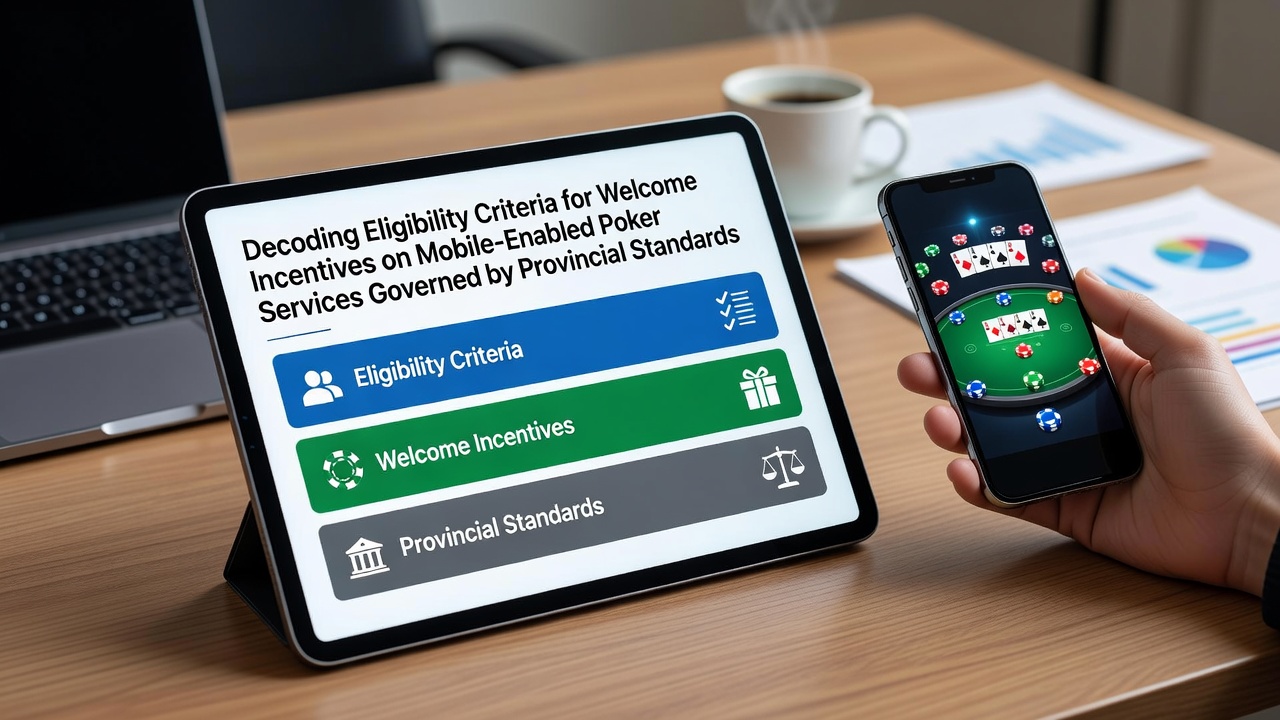
Provincial Frameworks Shaping Welcome Bonus Eligibility for Mobile Poker Platforms
Provincial standards across Canada establish clear rules that determine who qualifies for welcome incentives on mobile poker services, and these rules vary significantly depending on the jurisdiction where a player registers. Operators must align their systems with each province's requirements for age verification, residency confirmation, and account creation processes before any bonus becomes available, which creates a patchwork of conditions that players encounter when switching between platforms.
Core Eligibility Requirements Across Jurisdictions
Age verification stands as the foundational step in nearly every province, with operators required to confirm that users meet the minimum threshold of 19 years in most regions or 18 in select areas such as Alberta and Quebec. Residency checks follow immediately after, demanding proof that the individual maintains a primary address within the province where the service operates, and mobile applications often integrate government-issued ID scanning tools to complete this step during onboarding. First-time account creation rules prohibit multiple registrations from the same device or IP address, while deposit requirements typically specify that an initial real-money transfer must occur within a set timeframe after account activation.
Research from regulatory bodies shows these steps reduce unauthorized access and ensure compliance with local gaming laws. Operators track player behavior through unique identifiers tied to mobile devices, and any attempt to circumvent location services triggers automatic account reviews. Data indicates that provinces with stricter geofencing protocols report fewer instances of cross-border play compared to those with more flexible verification methods.
Regional Differences in Verification Processes
Ontario's framework through the Alcohol and Gaming Commission of Ontario mandates that mobile poker services complete registration via approved channels that link directly to provincial databases for real-time address validation. In contrast, British Columbia emphasizes additional steps for bonus eligibility, including a mandatory cooling-off period between account creation and incentive activation that can extend up to 48 hours. Manitoba and Saskatchewan apply similar residency rules but allow operators greater flexibility in how they document player locations through periodic checks rather than continuous monitoring.
According to the Alcohol and Gaming Commission of Ontario, these variations stem from each province's legislative priorities around consumer protection and revenue allocation. Players who move between provinces often discover that previously eligible accounts become restricted until they update their location data and complete new verification sequences. Mobile services respond by offering province-specific portals that guide users through the exact sequence required for their jurisdiction.
Mobile-Specific Constraints and Technical Standards
Mobile-enabled poker platforms face additional technical requirements because location services on smartphones can be spoofed or interrupted, prompting regulators to demand multi-factor authentication that combines GPS data with network information and device fingerprints. Welcome incentives frequently include wagering requirements measured in real-money hands played rather than simple deposit multiples, and these thresholds differ by province to reflect local market conditions. Operators must display eligibility terms within the application interface before any bonus activates, ensuring users acknowledge the rules through explicit confirmation clicks.

Those who've examined application logs note that failed verification attempts often result from outdated address information rather than intentional misrepresentation, leading services to provide in-app tools for quick document uploads. Evidence suggests that platforms maintaining separate regional builds for each province experience fewer compliance issues than those attempting unified national codebases.
Upcoming Regulatory Reviews and Their Potential Impact
Provincial authorities have scheduled coordinated discussions for October 2026 to examine whether current eligibility criteria require updates in light of emerging mobile technologies and cross-platform play patterns. These talks may address standardized approaches to digital wallet integration and real-time location reporting, which could streamline processes for operators while maintaining strict residency rules. Figures from industry reports reveal that provinces participating in earlier harmonization efforts saw measurable increases in verified player registrations without corresponding rises in disputed bonus claims.
Operators prepare for these reviews by auditing their current verification flows and identifying areas where provincial standards diverge most sharply. Players benefit when services communicate upcoming changes in advance, allowing time to adjust account details before new rules take effect. Research indicates that transparent communication around eligibility criteria correlates with higher retention rates among mobile poker users who regularly access welcome incentives.
Conclusion
Provincial standards continue to define the precise conditions under which mobile poker players access welcome incentives, creating a system where compliance depends on accurate location data, verified residency, and adherence to each jurisdiction's technical protocols. As October 2026 approaches, ongoing reviews may introduce refinements that affect how operators implement these rules across platforms, yet the core emphasis on age confirmation and provincial boundaries remains consistent. Players who understand these frameworks position themselves to meet requirements efficiently when exploring different mobile services.